

Pharmaceutical freight from Malta is complicated at the best of times. When the cargo is temperature-sensitive, super high-value, and has a hard 120-hour window from packing to arrival, it becomes something else entirely.
The Challenge: A High-Value Shipment That Could Not Afford to Go Wrong
In May 2026, Mail Boxes Etc Malta was approached to handle the export of pharmaceutical-grade raw material produced in Malta, destined for a manufacturing facility in Minneapolis, USA. This was not a finished medicine. It was the raw ingredient, the starting point of the recipe, which made it just as critical as the end product it would eventually become.
The cargo had to be kept within a strict temperature range of +15°C to +25°C for the entire journey. Drop below that range and the material degrades, exceed it and the same happens. There is no temperature-controlled air connection operating directly out of Malta, so this is where the Mail Boxes Etc team stepped in with and packed the consignment with specialised gel packs that are capable of maintaining the required temperature window, but only for 120 hours from the moment packing was completed.
That was the window.
Why 120 Hours is far less than you’d think
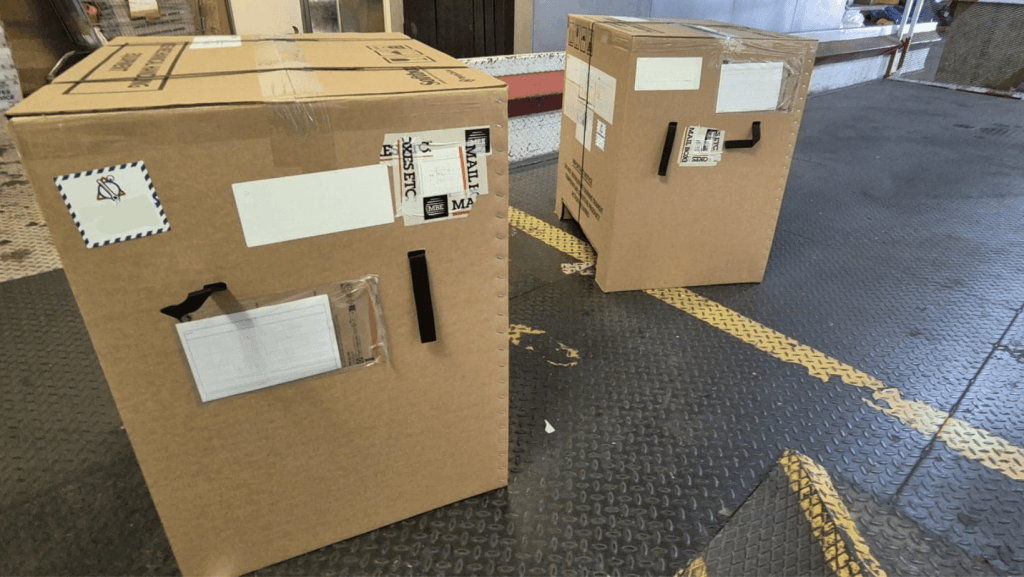
Most international freight has room for the occasional delay. A missed connection, a hold at customs, a ground transfer that takes longer than expected. These things happen, and in those cases, things are inconvenient. With this shipment, the same delays would have turned this expensive shipment of pharmaceutical material into waste, and would stop a manufacturing process on the other side of the Atlantic before it could even begin.
There was no plan B.
How Mail Boxes Etc. Malta Solved It: Finding the Right Route
The first task was identifying a viable routing that could get the consignment from Malta to Minneapolis within the time constraint. This meant working backwards from the deadline and mapping every leg of the journey against it, not just the flights, but also the ground transfers, the time in the air shed, the connection window in Europe, and the final handling in the US.
The team identified a solution via Air France, connecting through Paris Charles de Gaulle before the transatlantic leg into Minneapolis-Saint Paul International Airport.
On paper, it worked. On the ground, it had to move like clockwork.
The Execution: Every Minute Accounted For
11 May 2026
From the moment packing is completed, the 120-hour countdown begins.
15:00 hrs – Collection from the shipper. The consignment was loaded and moved under active temperature control, maintained at +18°C, directly to the air shed at Malta International Airport.
15:25 hrs – Released at the air shed and transferred into a temperature-controlled chamber. Twenty-five minutes from collection to secured, climate-controlled storage.
14 May 2026, 06:00 hrs – Departure from Malta on a KM Air Malta service, connecting through Paris Charles de Gaulle.
15:55 hrs -Onward connection with Air France from Paris, departing at 15:55 hrs local time, arriving in Minneapolis at 17:50 local USA time the same day.
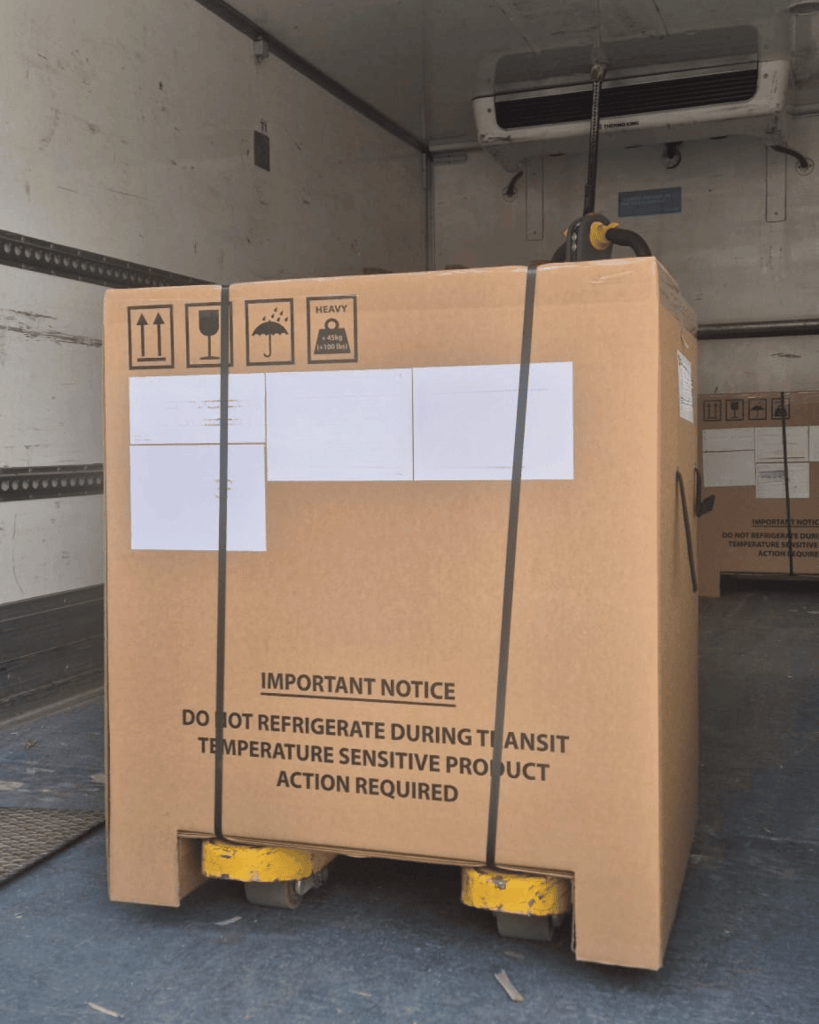
Total elapsed time from packing to arrival: approximately 105 hours.
Fifteen hours inside the limit. Not too comfortable, but safe and within the deadline.
What Made This Shipment Different
Temperature-sensitive pharmaceutical logistics is not a category where you can improvise. Every decision from routing to ground handling to storage at the air shed has a direct bearing on whether the cargo arrives in the same condition it left. A shortcut at any stage would have been invisible right up until it was not.
What the coordinated effort of the Mail Boxes Etc team brought to this was not simply a courier relationship and a booking system. It was the ability to look at a genuinely constraining problem, identify the only routing that works, and then coordinate every handover with enough precision that a 120-hour window became a 105-hour reality.
That kind of freight handling is not standard. Most shipments do not need it. But when yours does, working with people who understand what is at stake makes the difference between a successful delivery and an expensive loss.
Frequently Asked Questions About Temperature-Sensitive Freight From Malta
Can Mail Boxes Etc Malta handle pharmaceutical freight and other temperature-sensitive shipments?
Yes. Mail Boxes Etc. Malta has experience coordinating complex, temperature-sensitive consignments including pharmaceutical raw materials, with full attention to cold chain integrity, routing constraints, and documentation requirements.
Is there a direct temperature-controlled air connection from Malta?
Not currently. Shipments requiring active temperature control need to be routed via connecting hubs, which makes routing selection and timing critical. Mail Boxes Etc Malta can identify viable connections based on your cargo’s specific requirements.
What happens if a temperature-sensitive shipment misses its connection?
Depending on the cargo, a missed connection can mean the difference between a successful delivery and a compromised consignment. This is why pre-planning the full routing, including contingency time, is essential before the cargo is even packed.
How do gel packs work for pharmaceutical freight?
Gel packs are used to maintain a specific temperature range passively, without active refrigeration. They have a defined shelf life, in this case 120 hours, after which they can no longer guarantee the required temperature window. The entire logistics plan must be built around that limit.
Can Mail Boxes Etc Malta handle high-value freight exports from Malta?
Yes. Mail Boxes Etc Malta regularly handles high-value, specialist freight including consignments that require careful coordination across multiple carriers and handling points.
Want to Ship Something That Needs More Than a Standard Solution?
If your cargo has special requirements, whether that is temperature sensitivity, a tight delivery window, high value, or regulatory complexity, talk to the Mail Boxes Etc Malta team. We will tell you honestly what is possible and build a plan around what your shipment actually needs.
Leave a Reply