
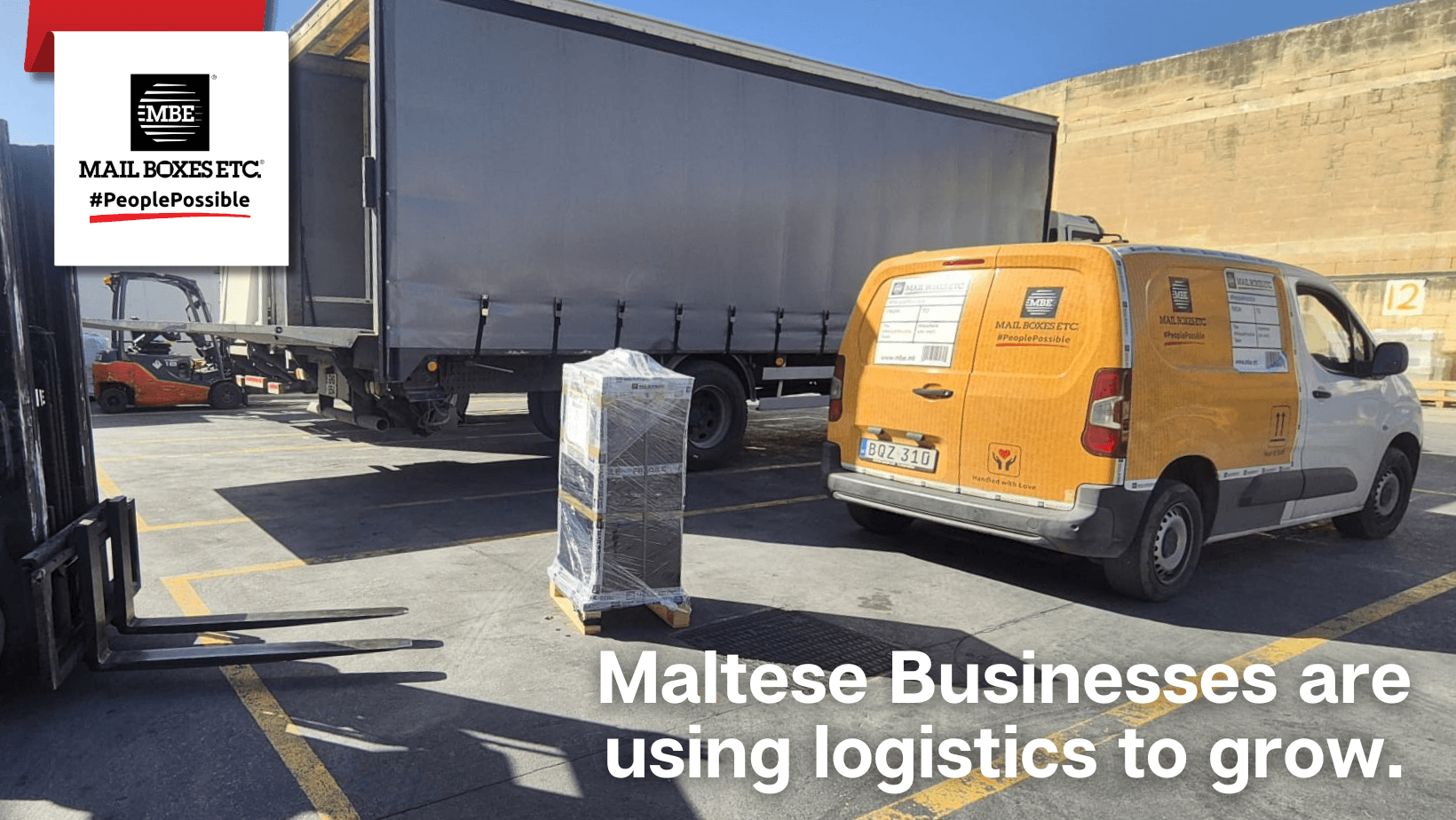
For many businesses in Malta, logistics is an afterthought, an expense to be minimised, not a lever to be pulled. But that thinking is changing. As Malta’s e-commerce market increased in value in 2025 and continued growth is projected through the decade, forward-thinking SMEs are realising that the right logistics strategy doesn’t just move goods, it moves the needle on growth.
Whether you’re an artisan, a growing online retailer, or an established business looking to expand into the global E-commerce market, here’s how logistics can become one of your most powerful business tools.
Malta’s geography: Constraint or Competitive advantage?
Being an island nation means Malta has always been entirely dependent on logistics for the movement of goods. At first glance, this sounds like a disadvantage. In practice, it can be the opposite.
Malta’s position as a full EU member state means Maltese businesses enjoy frictionless access to a single market of over 440 million consumers. The key to unlocking that advantage is a logistics partner that doesn’t just wait for instructions but one that proactively manages the process. From VAT forms to customs documentation, a good partner has everything prepared before you need it, so goods in transit are never a source of stress.
E-commerce growth in Malta depends on shipping capability.
Malta’s e-commerce sector is one of the fastest-growing in Southern Europe. User penetration is forecast to reach 42% by 2029, and 89% of Maltese consumers already shop across EU borders, meaning the appetite for cross-border trade can flow both ways.
For online businesses in Malta, this creates an enormous opportunity, but only if your fulfilment operation can keep up. The businesses pulling ahead aren’t necessarily the ones with the biggest budgets; they’re the ones who’ve built reliable, scalable shipping into their model from the start.
The four pillars of competitive e-commerce logistics are delivery speed, cost control, returns handling, and the ability to reach new markets without friction. Get these right (whether through an in-house setup or by partnering with the right logistics provider), and your e-commerce operation becomes genuinely scalable.
Outsourcing logistics: How SMEs are levelling the playing field.
While large corporations have had an edge in logistics, that gap is narrowing.
For Malta’s SMEs, outsourcing logistics removes the need for heavy upfront investment in warehousing, staff, and infrastructure. More importantly, it frees up management time to focus on the core business — product development, customer relationships, and growth.
The NSO’s 2024 ICT and E-Commerce survey found that Maltese enterprises generated €2.9 billion in e-commerce turnover the previous year — a figure that reflects the scale of opportunity available to businesses that have the right operational backbone in place. For many of those businesses, third-party logistics (3PL) is the backbone.
Packaging is a part of your Brand, treat it as such.
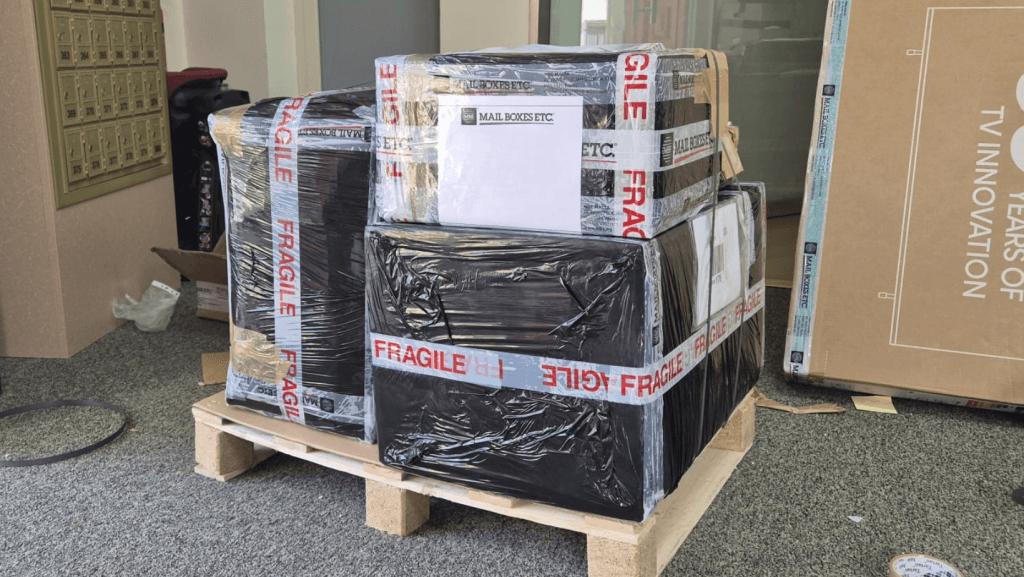
The unboxing experience could be the first physical contact a customer has with your brand. Yet packaging is one of the most commonly overlooked aspects of e-commerce operations – particularly for businesses just starting to ship internationally.
The two most common mistakes pull in opposite directions:
- Over-packing adds unnecessary weight, which increases shipping costs. While this is a cost typically taken on by your customer, don’t think they don’t know the cost of shipping or that they aren’t looking around for better deals.
- Under-packing risks goods arriving damaged. The process of returns, replacement, and customer complaint resolution is often more costly than the packaging savings. Many businesses that try to cut corners here quickly discover that the time cost alone outweighs any saving on materials.
Getting packaging right – using the correct materials, the right sizing, and protective standards appropriate for international transit – is both a cost-saving measure and a brand investment.

International expansion doesn’t have to be complicated
One of the biggest barriers to Maltese businesses selling beyond their local market isn’t ambition, it’s the perceived complexity of cross-border logistics.
Customs procedures, duties, documentation requirements, and VAT compliance across different jurisdictions can feel overwhelming. The right logistics partner simplifies all of this. From customs clearance to duty calculation and export documentation, a capable partner removes the friction that stops many SMEs from taking their first steps into the EU market — or scaling their presence once they’re there.
It’s worth noting that Malta’s own National eCommerce Strategy 2024–2030 explicitly targets SME growth through cross-border digital trade. Businesses that invest in logistics infrastructure now are positioning themselves to benefit from that national momentum.
Efficiency as a long-term saving, not as an outsourced task.
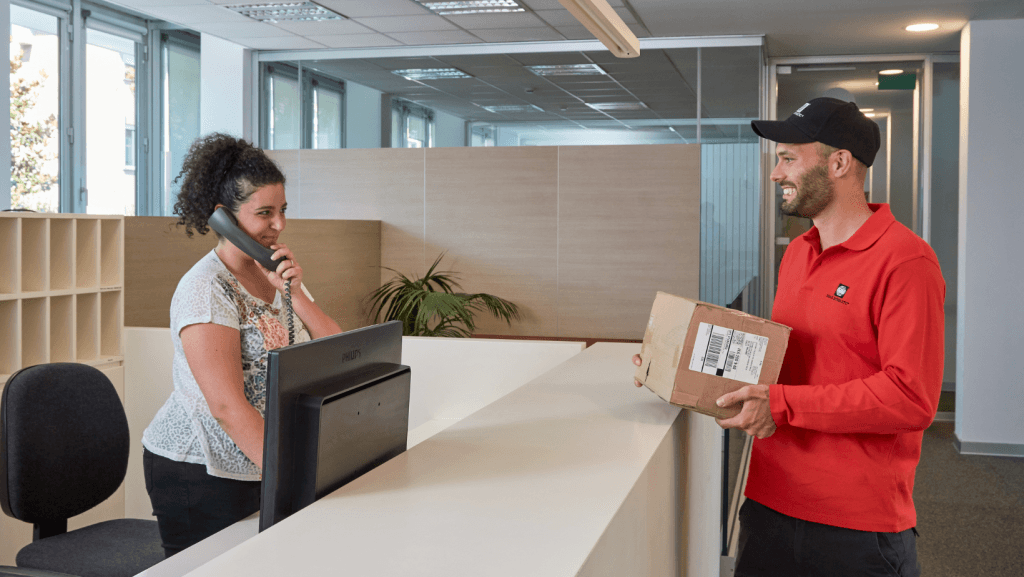
There’s a common misconception that outsourcing logistics simply means paying someone else to do the same job. The reality is different: a professional logistics partner typically delivers fewer delays, fewer damaged shipments, faster resolution when things go wrong, and more predictable costs over time.
For businesses that have previously managed logistics ad hoc — chasing couriers, filling in paperwork manually, dealing with returns without a clear process — the difference can be transformative. Time spent managing logistics problems is time not spent on growing the business.
A logistics partner is a growth partner.
The best logistics relationships go beyond transactional shipping. When a supplier faces a delay, a route gets disrupted, or a new market presents an unexpected regulatory hurdle, a true logistics partner helps you navigate it, not just report it.
That kind of advisory relationship is increasingly valuable for Maltese SMEs looking to scale internationally. The businesses growing fastest aren’t just using logistics to fulfil orders – they’re using it to unlock new markets, reduce operational risk, and build the kind of reliability that earns customer loyalty.
The Bottom Line
Malta’s position, as a connected EU member state, a growing e-commerce market, and a Mediterranean hub with access to the whole of Europe, gives local businesses a genuinely strong platform for growth. But that platform only delivers if your logistics can keep pace.
Whether you’re shipping your first order abroad or looking to streamline an operation that’s grown beyond your current setup, the conversation starts with one question: is your logistics strategy built for where you want to go, or just for where you are today?
If you’re ready to rethink how logistics can work harder for your business, Mail Boxes Etc. Malta is here to help.
Leave a Reply